

This was a great circular walk that took me from Bolton Abbey, past the ruins of Bolton Priory, along the River Wharfe, by the raging Strid, and up to Hare Head on Barden Moor. While the cold, grey, rainy weather did literally dampen my day, it didn’t stop me enjoying some of the best sights in the Yorkshire Dales. If I ever get around to writing my guidebook of walks to do in poor weather, then this walk will certainly be included.
My walk started in the neat car park run by the Bolton Abbey Estate in the village of Bolton Abbey. From here, I walked past the gift shop and by a post-box that had been amusingly yarn-bombed, and then through the village until I got to an archway in a stone wall.

Going through that archway is always amazing, as you step onto a path running down a wide, grassy bank that sweeps down to the rocky shore of the River Wharfe, with the ruins of Bolton Priory to one side, and the moors in the distance. On this day, the impressive remnants of the Priory looked slightly bleak against the grey sky and the moors seemed washed out by low cloud.

Bolton Priory was founded as an Augustinian monastery in 1154 and closed in 1539 with the Dissolution of the Monasteries. Although the Dissolution saw the Priory stripped of its assets, and the buildings themselves stripped of their furnishing and fittings, the nave of the church was kept intact so that it could be the parish church of Bolton village (as it was called then). The impressive looking Priory Church is still in use today and sits at one end of the skeletal remains of the Priory.
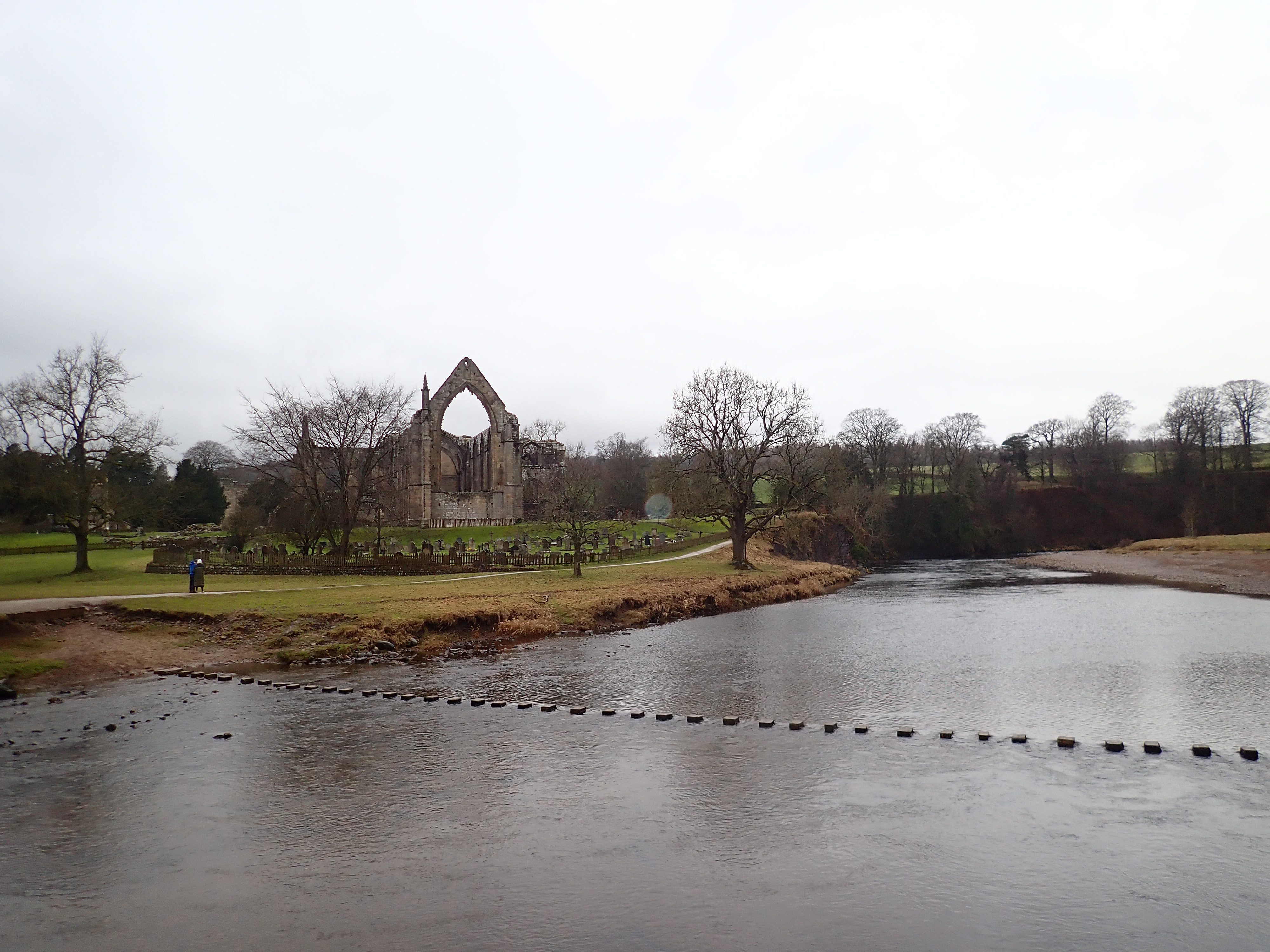
I decided against risking crossing the Wharfe by the famous – and wet – stepping stones and took the bridge to the other bank instead. I then followed The Dales Way along the Wharfe over muddy fields, and then into the woods. The path first staying close to the river and then climbing up the side of the valley as it rose steeply away from the water.

This path is not the most direct way along the Wharfe, but its twists, turns, ups and downs make it more fun than the walk along the other bank. At one point, a coin tree forms a small bridge that acts as a mini shortcut around a curve in the path. Coin trees are a form of wish tree. They are usually tree stumps or fallen logs into which coins are hammered as votive offerings. The idea is that leaving a coin enables you to make a wish in a similar way to throwing a coin into a wishing well. Apparently, the wishes traditionally made on a coin tree were for the end of an illness, and removing the coin would cause the illness to return.


After a while, the trail descended through the woods until it met a road and I carried on along it for a short way. While the path then crossed Pickles Gill Beck by a wooden bridge, I kept on the road to slosh happily through the beck at a ford. The path then headed back to the river, where it ran along the top of the bank until it reached Cavendish Bridge. I crossed the bridge and then took the substantial track to carry on upstream through the woods.
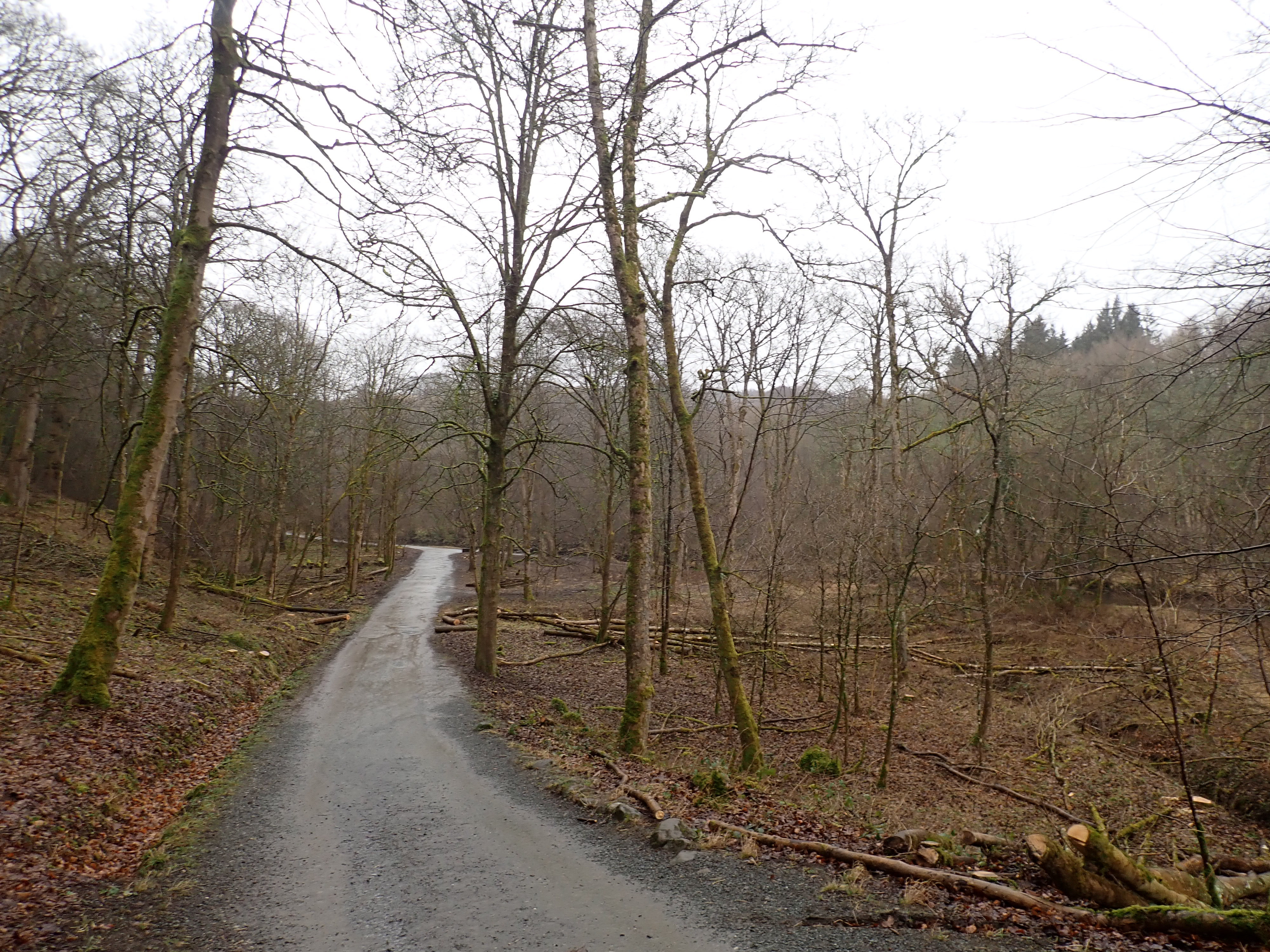
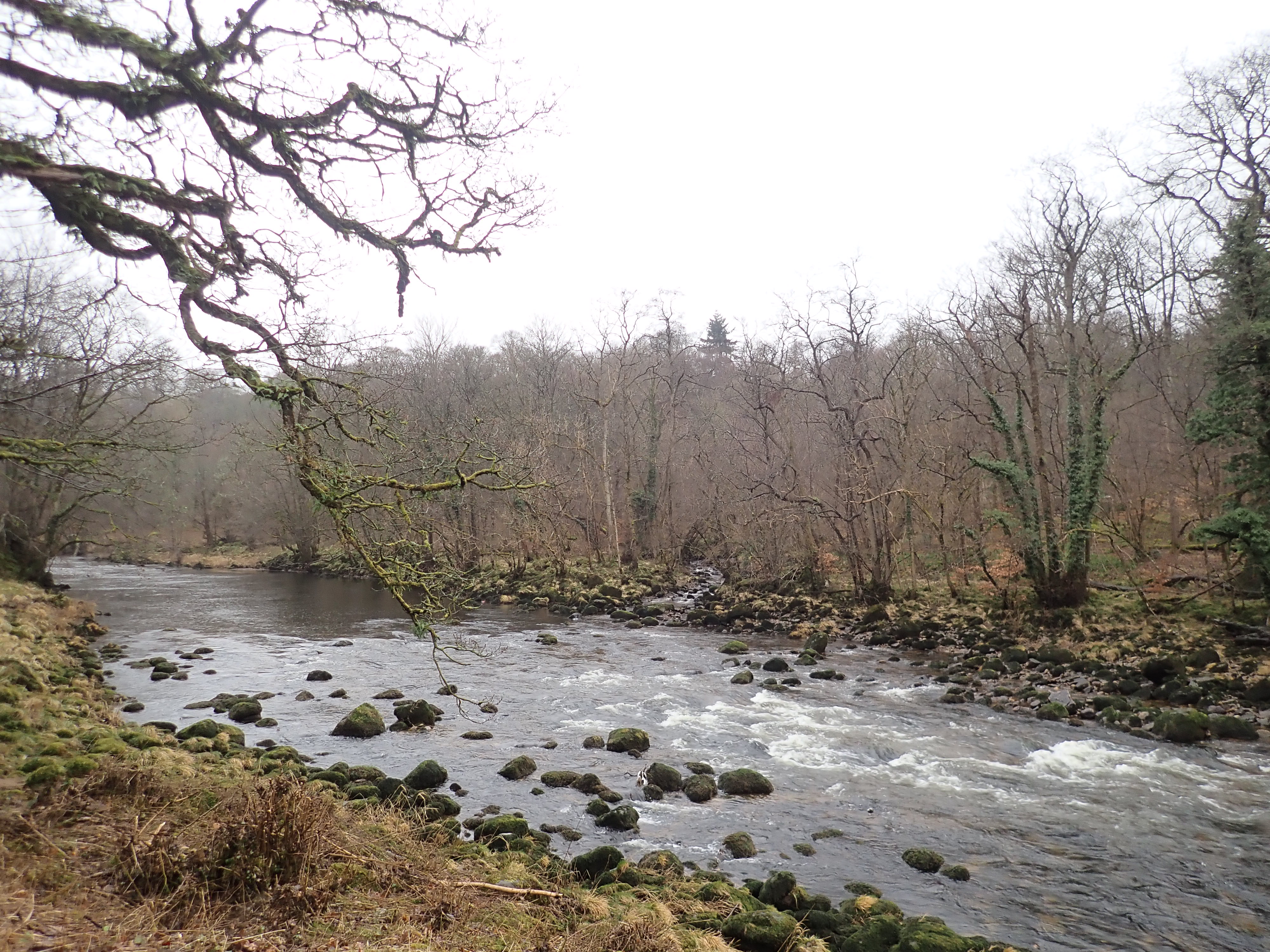
This track is so well-built that it feels like a road and so doesn’t make for particularly interesting walking. However, the trees that line the Wharfe here are amazing. They are coated in lichen and moss, while ferns often grow from nooks and crooks in their trunks and branches. I enjoyed looking at them while I followed the Wharfe through the wooded valley to The Strid, one of the highlights of my walk.
The Strid is a narrow chasm cut into the millstone grit by the River Wharfe. The sedate river turns into rapids here as it narrows to only a couple of metres across, but over 9 metres deep. While the name of this place comes from the Old English word for stride or step, trying to cross the river at this point would be very foolish and is strongly discouraged. Signs warn visitors to stay back from the edge of the water and state that people have lost their lives in The Strid. It’s said that no one has ever survived falling into The Strid, and this has led some to describe it as the most dangerous stretch of water in the world. I’m a bit sceptical that there aren’t more dangerous stretches of water elsewhere. However, the strong undercurrents that are said to exist in The Strid, combined with its depth and the overhanging sides, mean that I can easily believe that falling into the Wharfe here would be fatal. That is why I was very careful when admiring this beautiful and dramatic section of the Wharfe.
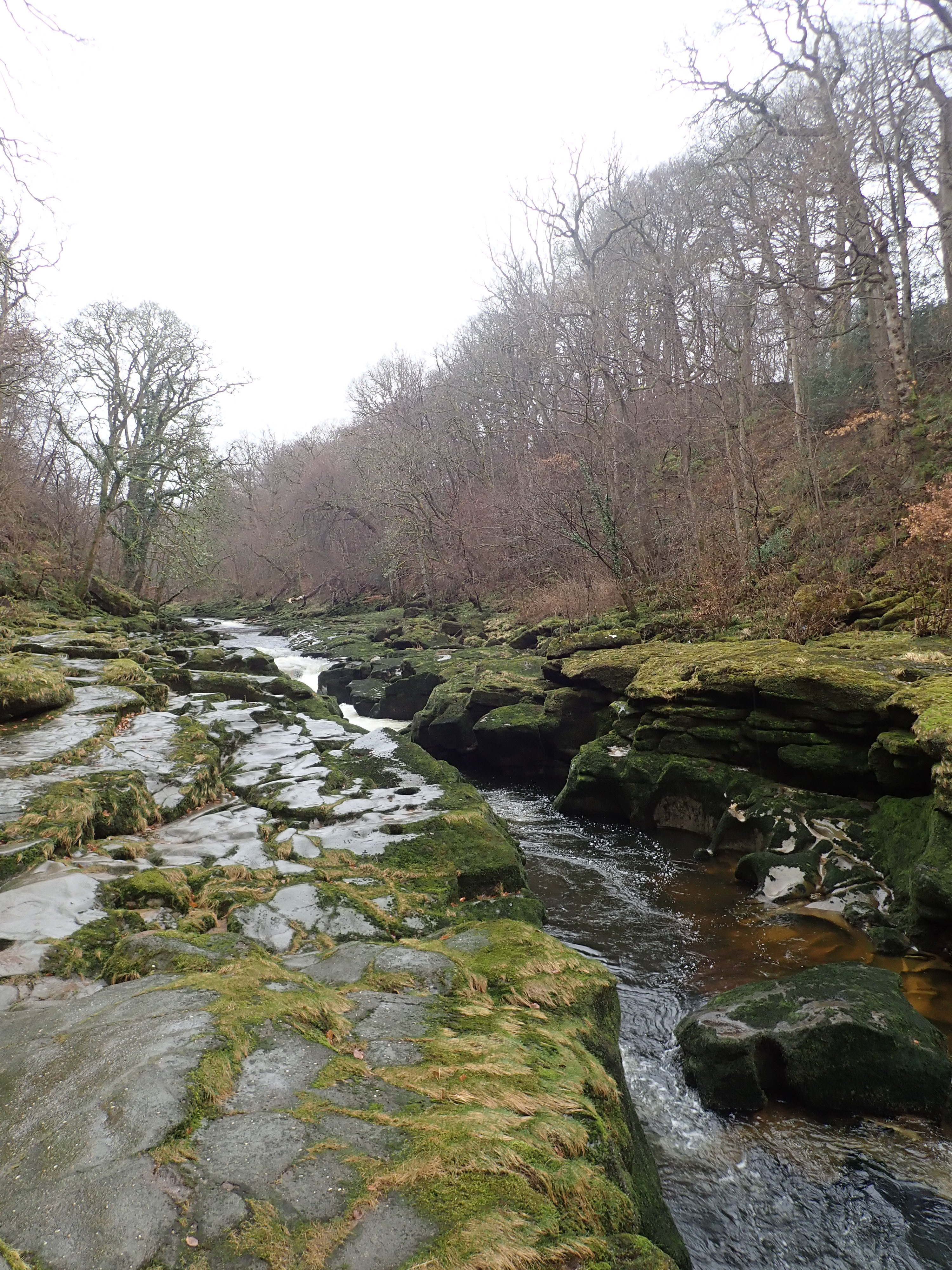

From The Strid, I took a fun path that climbed up and around the side of a bluff. This gave me good views down to The Strid and further up the Wharfe.

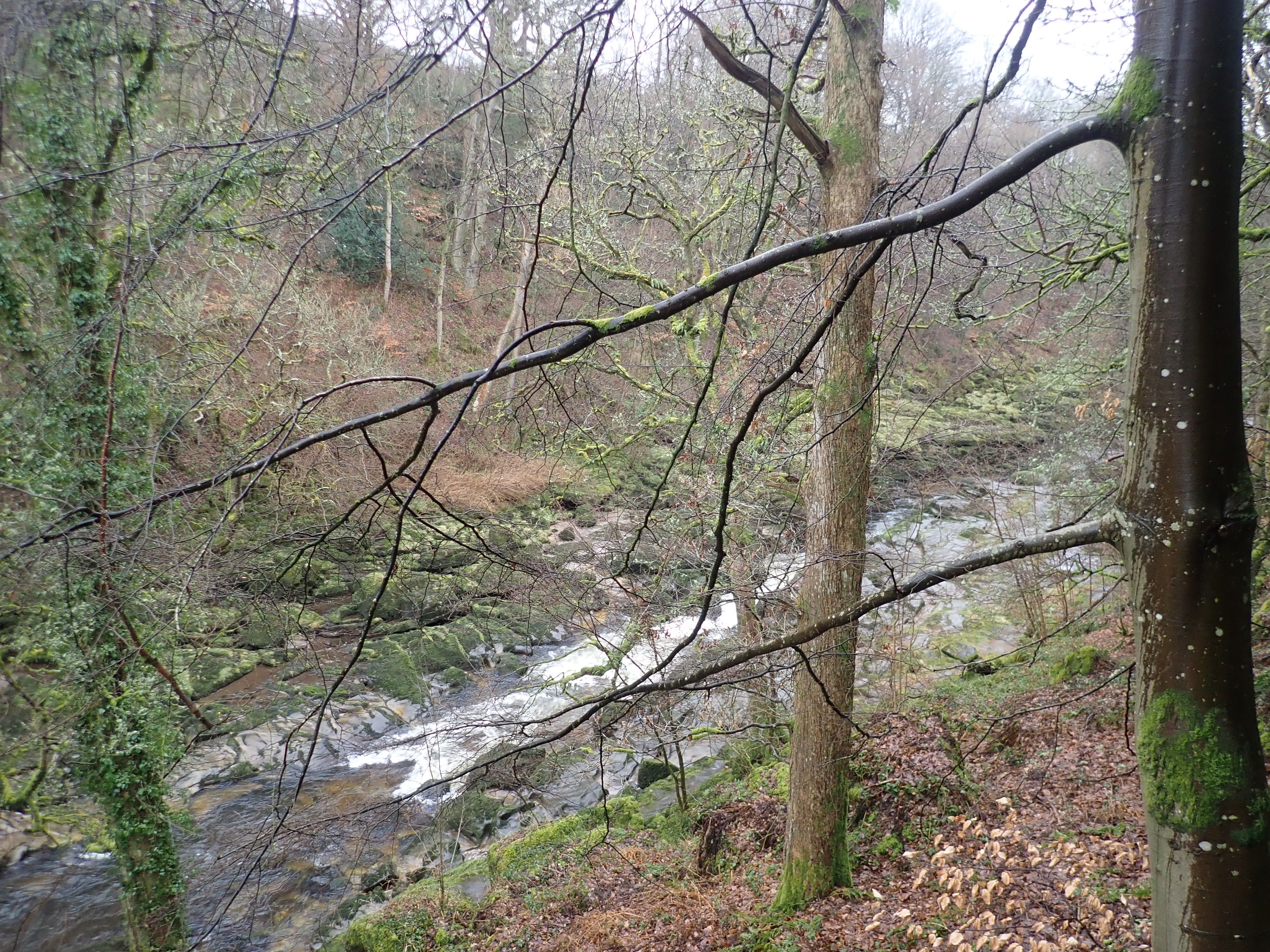
The path carried on high above the valley until it forked just before a bluff above a curve in the river. I took the left fork to go through a beech wood carpeted with bronze leaves and onto the top of the bluff. From there I got a fantastic view of the Wharfe, and I could make out the remains of Barden Tower, a former hunting lodge, in the distance.

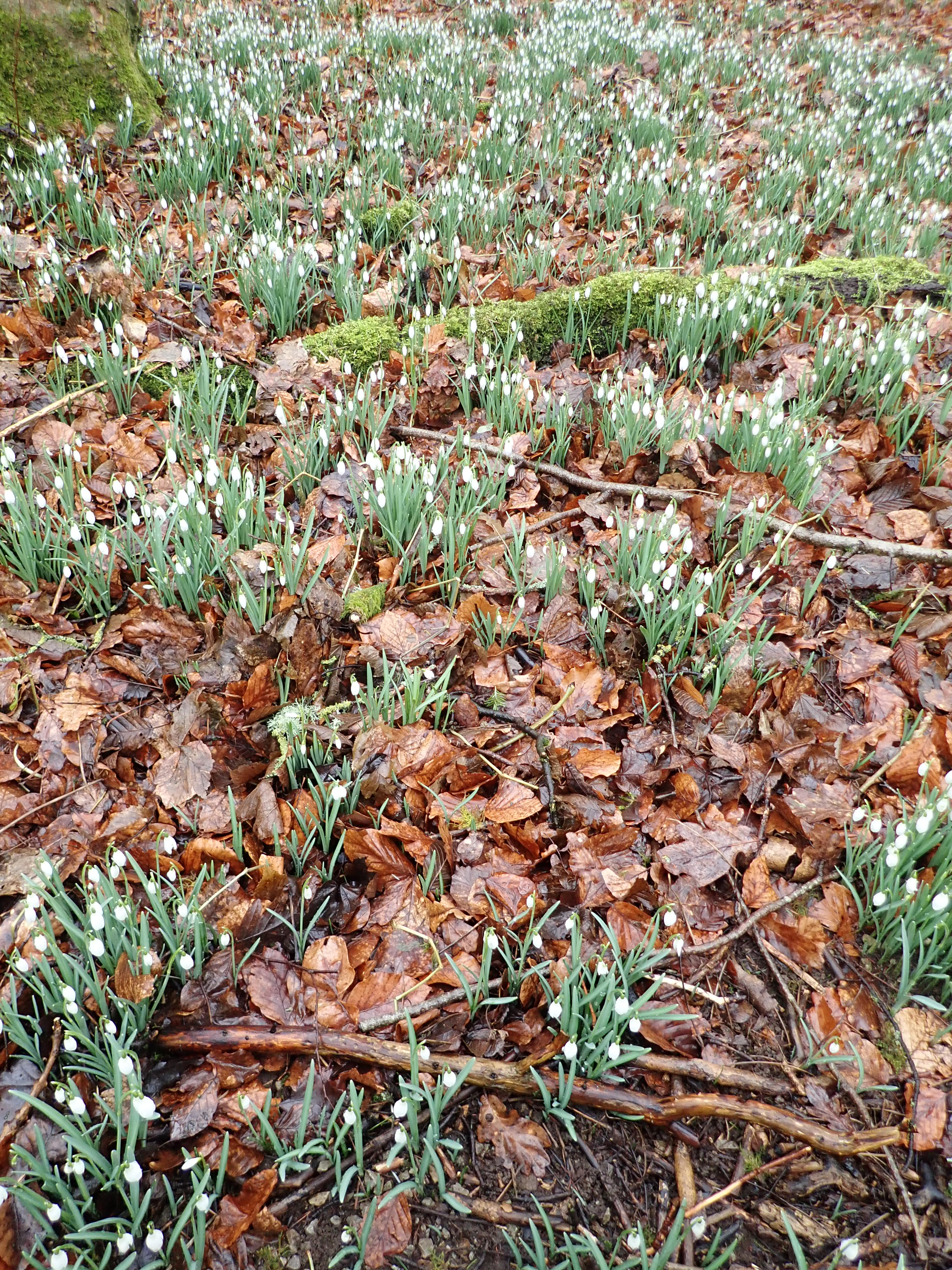
As I headed away from the valley, the path passed lovely patches of snowdrops that had pushed their way up through the beech leaves. I also passed the grounds of Wharfedale Montessori School, with dens and a hammock among the trees, and then another of the Bolton Abbey Estates’ car parks.
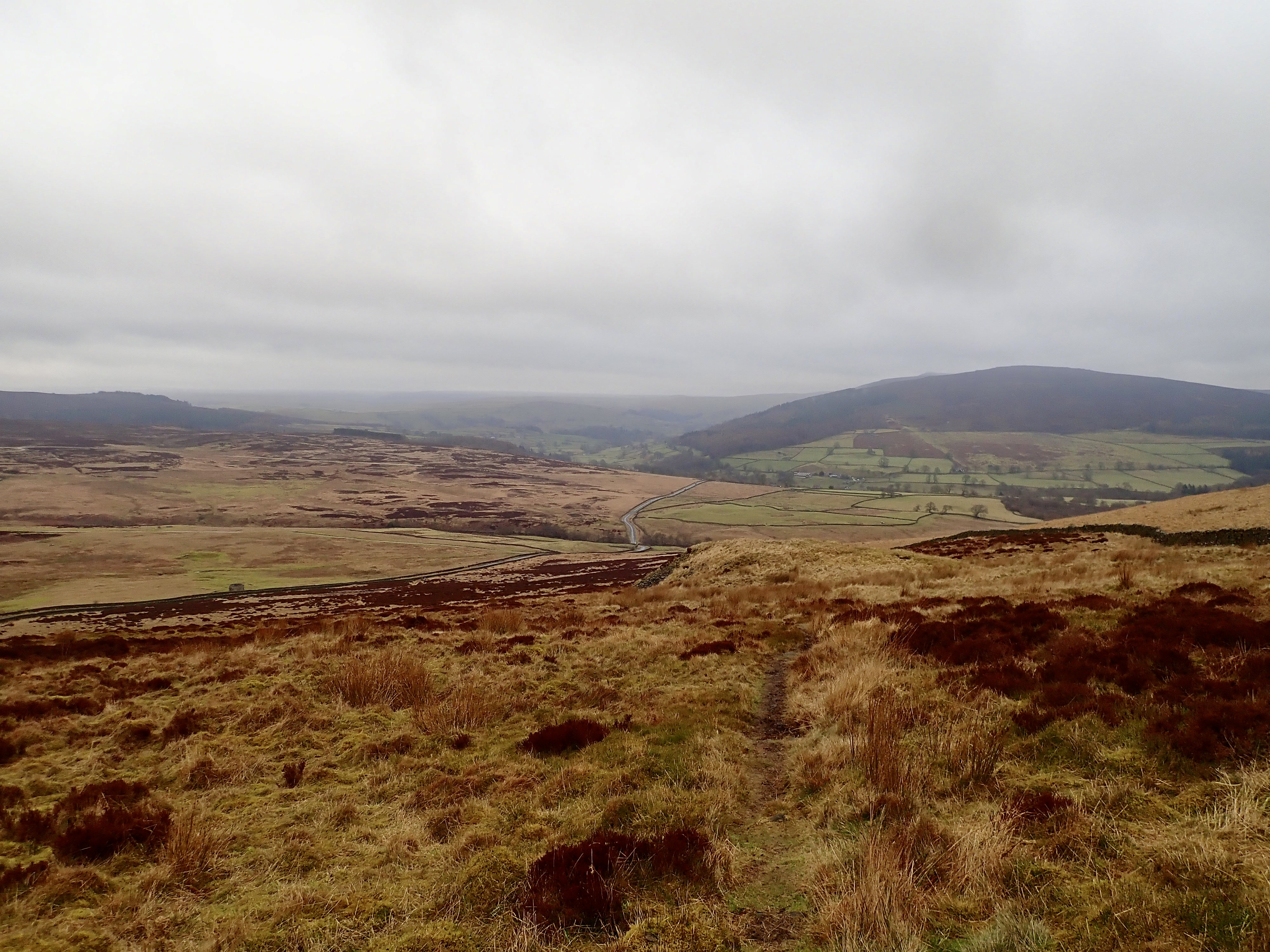
The rain finally eased up as I walked over a road to a footpath heading up a field. At a stile at the top of the field, I stopped to look back at the view across the dale to Barden Fell, then crossed the stile onto Barden Moor.

A well-trodden muddy path traversed the moor next to a drystone wall, but it gradually became indistinct and boggy. By the time I had left the wall behind to traverse the side of the moor, the path was periodically appearing and then disappearing among yellow grass, patches of reeds, and stretches of bog that I sank into.

The moors rolled away into the distance, getting higher as they went, until the moorland on the horizon had a covering of snow. Even though I could see isolated buildings and the occasional vehicle on the road I was walking towards, I felt like I was somewhere really remote. I enjoyed the feeling of space and solitude.

My route eventually joined up with a track that was slowly being swallowed by the moor. I followed this to a wall with a gate that led onto a road, and I followed the wall uphill until I turned to take a vague path up the moor. After a few minutes, I passed an overgrown spoil heap from an old mine. From here I could see Lower Barden Reservoir and the dam wall of Upper Barden Reservoir. In the other direction, through the grey haze of approaching rain, I could make out Skyreholme and Simon’s Seat, where I had been a few weeks before.

I picked up another track at the crest of the moor and followed this to the gently rounded summit of Hare Head. This was a lovely hill, and it was a shame that the weather was obscuring the views over Wharfedale. I got hit by a raw wind, snow and hail as I walked over Hare Head and then dropped down the other side of the hill.

The next stretch of my walk was unfortunately a bit dull as I descended the moor and then crossed a large pasture. Things got more interesting as I went through an attractive wood by a twisting path. My route then took me through a few more fields and past some of the Priory’s old fishponds. I met a track near some buildings and followed this down to the road through Bolton Abbey and the back of Bolton Abbey Hall (which was once the Priory’s gatehouse).

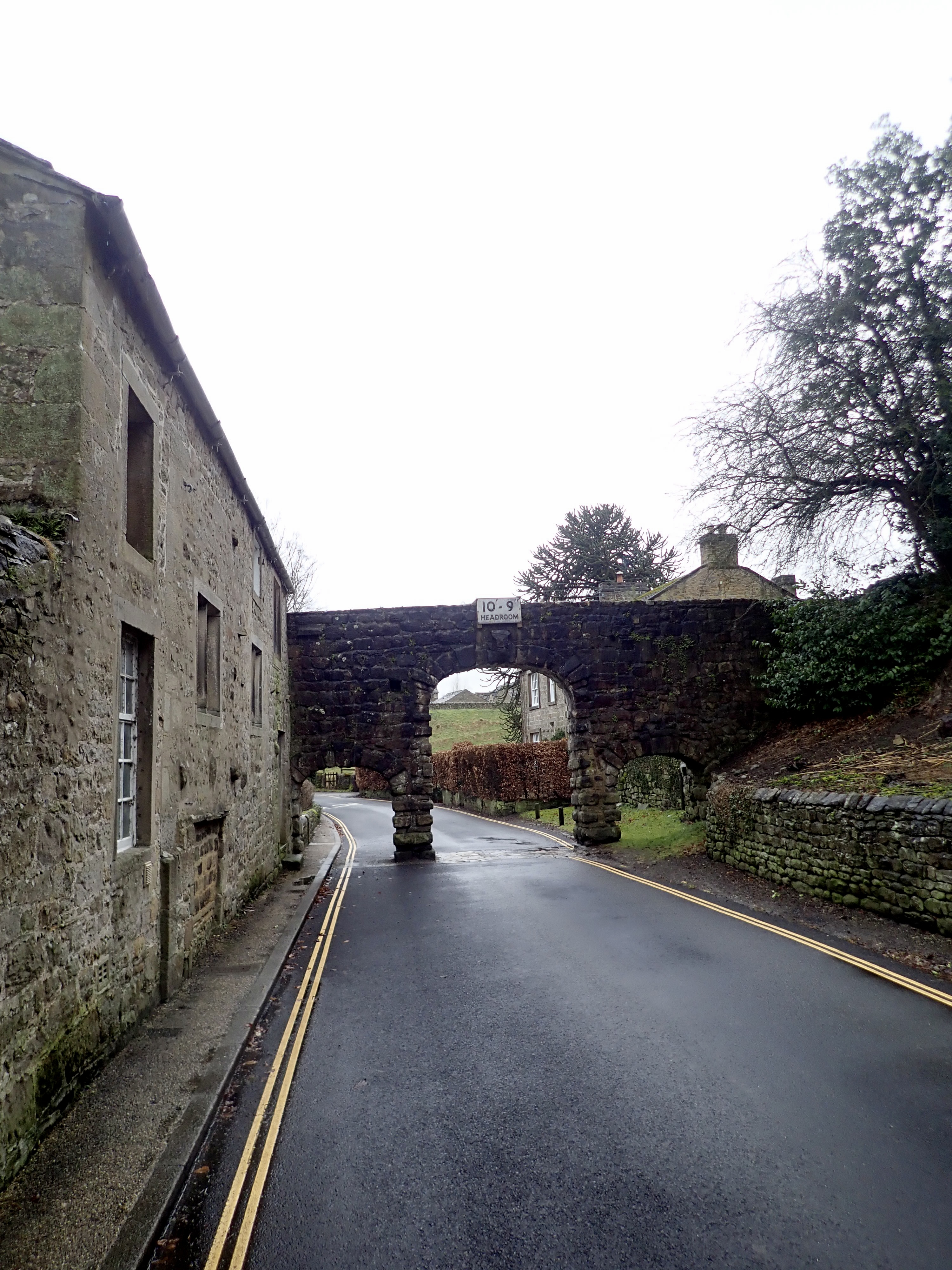
It was on this road that I passed under the last landmark of the walk – a triple archway that was once an aqueduct that carried water to the Priory Mill. It was then just a short walk back to where I had started.
Further information
This walk was a variation on a well-known walk that is described here. I did this route differently by going anticlockwise and initially going along the east bank of the Wharfe.
 the Severe climber
Great. I don’t know where your body would resurface if you fell in The Strid.
Often came here as a teenager, but I never knew what the three-arched bridge was at Bolton Abbey. Thanks.
Thanks.
I’m not sure either. It’s a rather grisly fate.
Read about the Strid a lot recently. Pure curiosity wants to jump it, but then again I’m surprised no one has dropped a waterproof camera in a few times to see what happens
What puts me off the idea of trying to jump to The Strid isn’t just that it looks a bit too far to jump and that the consequences of missing are very severe, but that the rocks are so slippy that there is risk of making the jump and then slipping/falling back into the water.
A YouTuber with the handle Jack a Snacks has a couple of videos on lowering a camera and a sonar device into The Strid.
Enjoyable read Robin. Reminded me of my own journey along the Dales Way, it was a rainy, grey day also when I walked past Bolton Abbey and the Strid!
Thanks Jim.
My first visit to Bolton Abbey was when walking the Dales Way.
I suppose the advantage of going past The Strid on a rainy day is that it might look more dramatic with the higher water level.
That was all my old stomping ground until I moved up here and I spent a lot of time walking that area.
One woman apparently did survive The Strid – because it was in spate so she didn’t get dragged down into the underground caverns and hollows and bashed about. Her husband pushed her in and then went straight off to the police station to report that she’d ‘fallen in’. As he was making his report, she tapped him on the shoulder and told the police that he’d actually shoved her in!
It’s a good stomping ground.
That’s a good story.
How much was it to park in the village carpark? I know the carparks down by the abbey are around £12 !! 😮 I used to park wherever I could find that was free so that meant weekends were out as they were too busy (or sometimes I used to cycle in from home)
It’s £12.50 if you book in advance and £15 if you pay on the day.
At that price, I think of it as much as an entry fee to the estate as a charge for car parking.
that’s horrendous! No wonder I used to look for a free spot somewhere… I couldn’t afford those amounts of a regular basis. I always think areas should charge locals, as they are regulars, less.
I think that there’s a good argument for that. The only option at the moment if you are a regular, local visitor, is to get the annual season ticket (£150, or £125 if renewing a season ticket before it’s expired).
I think I remember there was a season ticket before I moved up here
Fantastic post of places that I know so well. 🙂
Thanks James. Glad you liked it.