
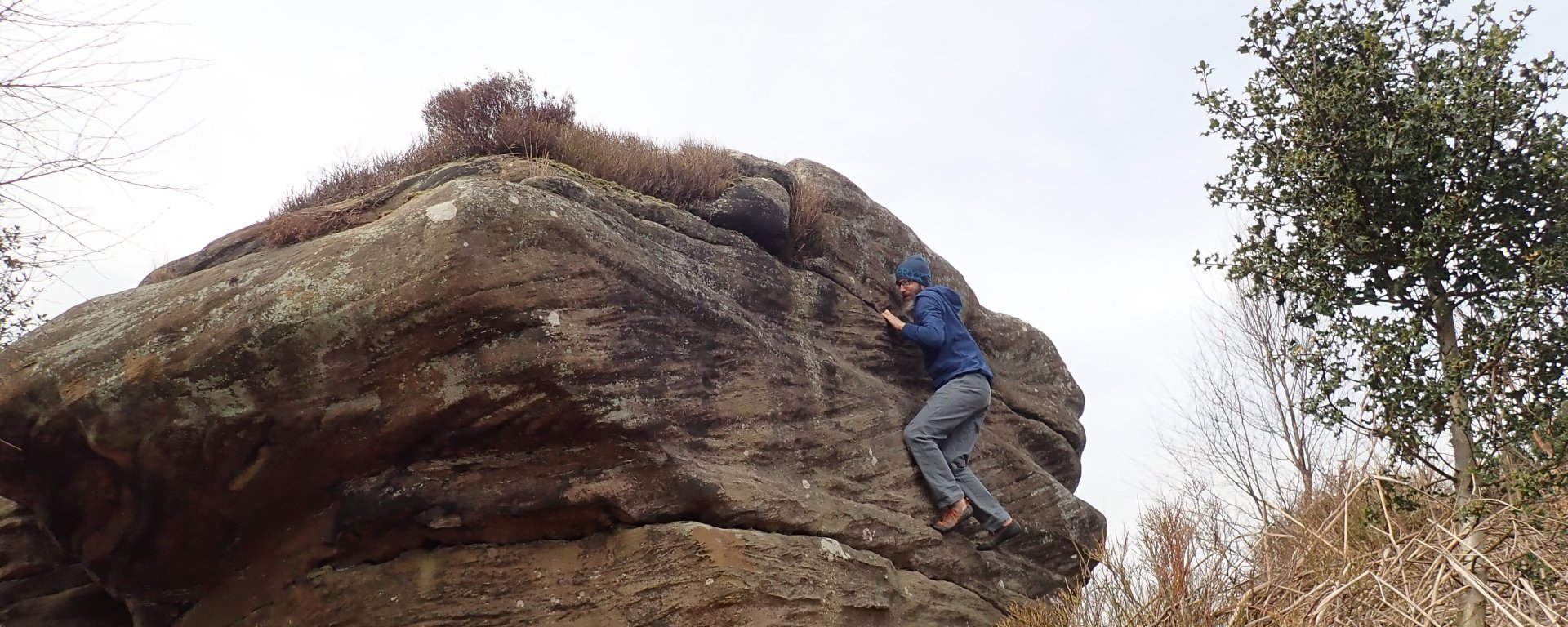
In the run-up to Christmas last year, I went bouldering at the Low Roof sector of Brimham Rocks for the first time. It was a good trip, but I unfortunately ran out of time before I could try a couple of intriguing traverses. I don’t often climb traverses, but I decided that I should try to come back to Low Roof to climb these two because they looked so engaging and fun. I realised at the beginning of March that I needed to do this within the next few weeks, otherwise the bracken would soon have regrown and enclosed the boulders. So last week I made a short and intense trip to Low Roof to go traversing.
The first traverse that I wanted to try was on the Nantucket boulder. This is a vaguely rectangular and flat mass of gritstone with a crown of heather that is almost cleaved in two by a horizontal break. To complete the problem Polpis Roof (3), you must traverse leftwards along this break from the right-hand end of the boulder all the way around to the back. However, the branches of a fallen tree at the left-hand end of the Nantucket boulder now make getting to the back of the boulder difficult. As I hadn’t brought a saw with me, I decided that Polpis Roof effectively ended at the first tree branch.
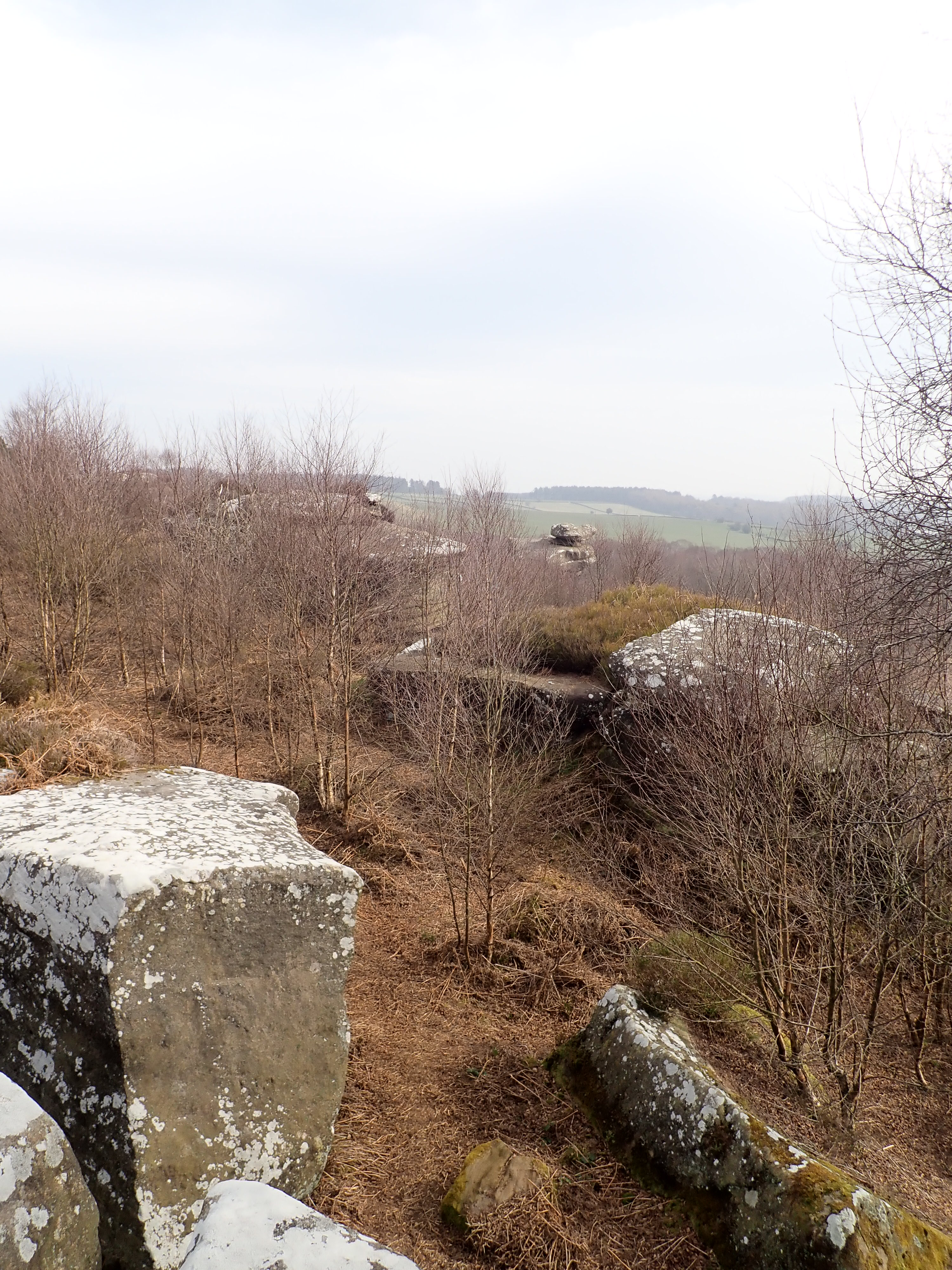
I found the start of Polpis Roof technically challenging and hard work. There wasn’t much for my feet, while the horizontal break had few features and quite a bit of lichen. Just staying on the rock was a strength-sapping struggle. Thankfully, the climbing got easier as I went on, with waves of rock and small ledges for my feet, and some positive handholds about two-thirds of the way along. I knew that to reduce the strain on my arms and improve my hold on the break, I had to sink down by bending my knees more and straightening my arms. However, I struggled to do this without it feeling like my hands were sliding off the rock. Eventually, I dropped off the boulder next to the tree branches with tired forearms and a sense that this traverse should not have been as hard as I had found it.
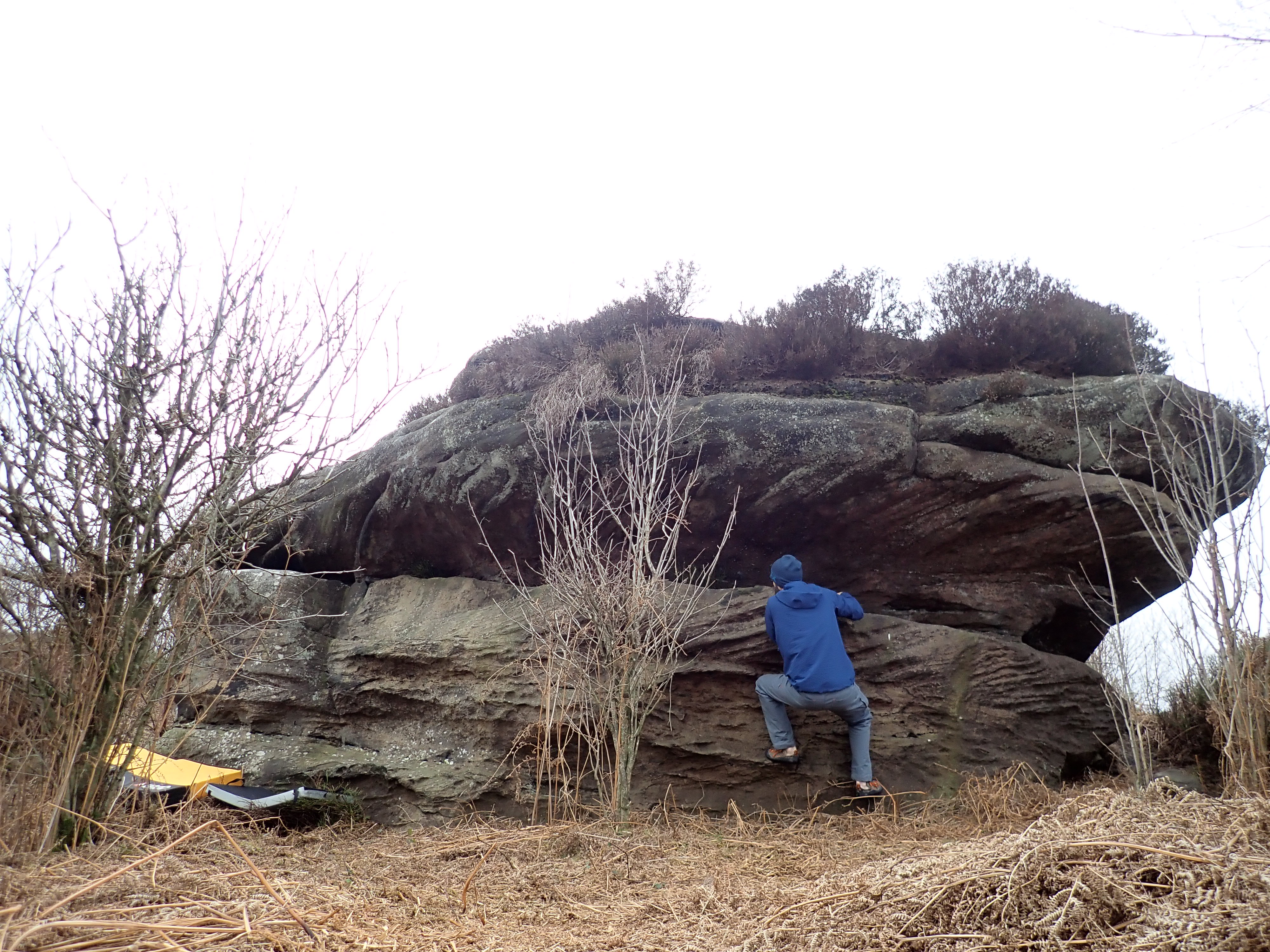
As I looked at the photos of me on this problem, I realised how poor my technique had been. I’d largely known what I should have been doing, but I simply hadn’t done it.
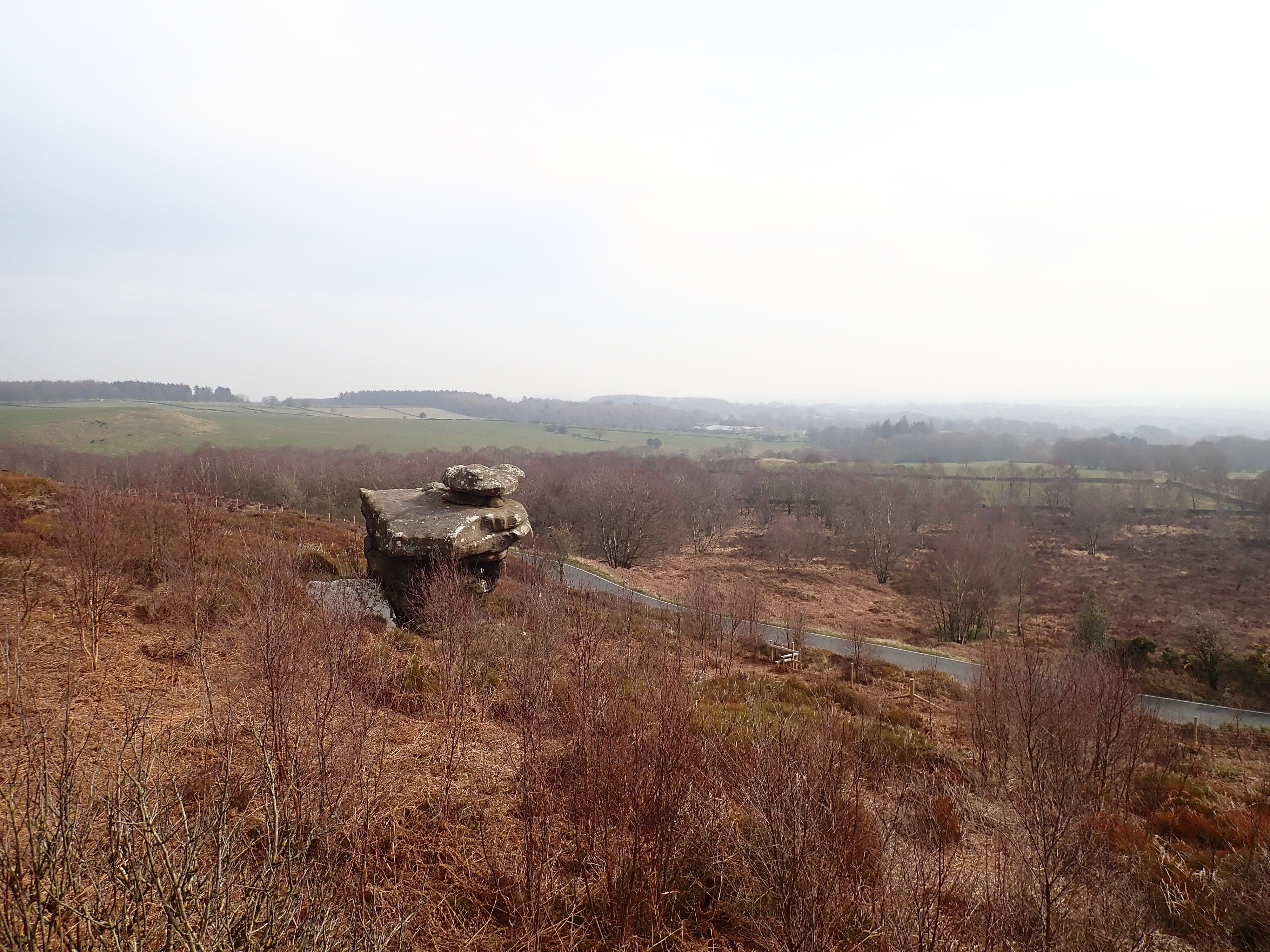
With a determination to do better on the next traverse, I moved on to the Swiss Tony boulder. This boulder has one vertical face with a couple of horizontal breaks and some lovely features, including a series of diagonal lines running along its middle. I then spent quite some time studying these breaks and features and comparing them with the photo on the 27Crags app of the problem Swiss Tony Traverse (3+) to try to understand what path I was meant to be taking across this section of rock. Did the line marked on the photo represent where my hands were meant to go or where my feet were meant to go? Perhaps it represented the middle of the route and so was roughly the line my belly button was meant to track? There did seem to be several different ways to climb the traverse, and I weighed up these options. I eventually decided that I was over-thinking matters, and that I should just start climbing sideways from one end of the boulder and do what seemed right.
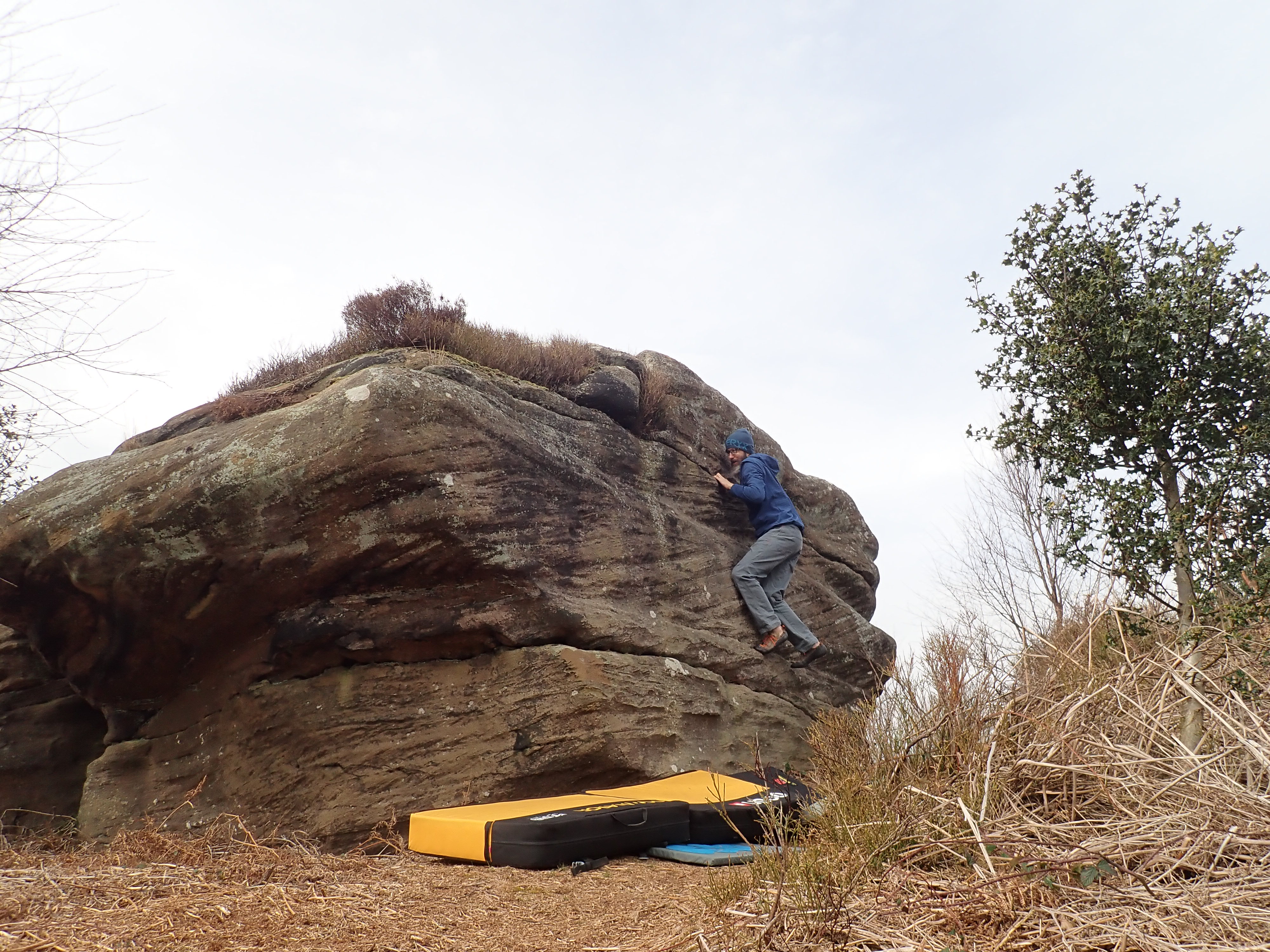
I found Swiss Tony Traverse challenging. I needed to be precise in my hand and foot placements, be careful in shifting my weight, and apply quite a bit of force on the holds to remain on the rock. Although I felt like I had climbed Swiss Tony Traverse better than I had climbed Polpis Roof, I came off several times and failed to complete the problem. I was tired by now, but decided to do one vertical problem to finish with. This was to climb the problem Ruth (3+); a few moves up the vertical breaks of Swiss Tony, to an overgrown top out.
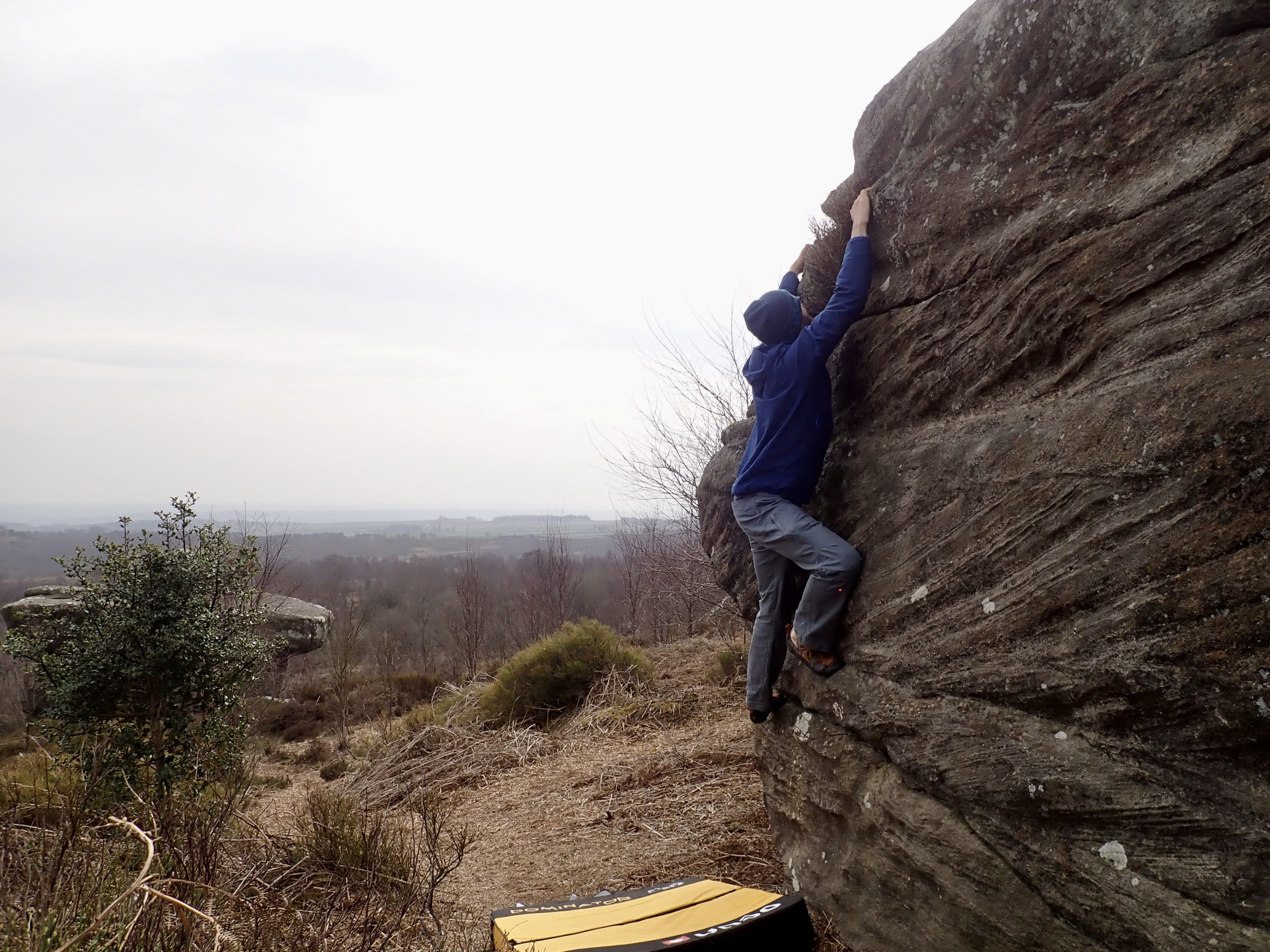
I found the two traverses hard and strenuous, but I still had fun trying them out and pushing my climbing. The lesson I took away from this short trip was that I should do traversing more often so that I can improve my technique and enjoy these climbs without exhausting myself.
Further information
The Unknown Stones website has a comprehensive guide to the bouldering in the Low Roof sector. The bouldering here also features on the 27Crags website and app.
 the Severe climber
Brimham is great for bouldering as well as for routes. Seems to be a lot of new problems; time for a revisit.
Those two blocks look interesting. Traversing is a good way of building up endurance, often missing in the modern boulderer used to a few moves.
Virtually on my doorstep is Craig Y Longridge – the home of classic traversing.
Brimham is somewhere that I keep going back to. I think I know it and then I learn about more problems to try.
I’m working on building my endurance, so maybe even more traversing is required.
I do need to get myself to Craig Y Longridge at some point. I probably need to build up my endurance and traversing technique before I do though.
I think traversing is good for technique. I just started back at the climbing wall 2 weeks ago prior to going back outdoors and found I wasn’t hanging on straight arms and was making them very tired early on by keeping them bent – my leg and footwork were okay though. Mind you, I’ve never really had very good technique but I generally enjoy myself 🙂
I think enjoying yourself is key.
My technique going up is pretty good. I hadn’t realised that my technique at going sideways had become so rusty.
I’m totally with you that enjoying yourself is absolutely key – that, to be honest, is why I mainly stick to the easier climbs because I enjoy them. I feel I’m getting a bit too old to push myself continually and I do that enough on the hills without doing it on the crags as well!
I know what you mean.